
 it
it en
en +39 039 9911011
 +39 039 9910445
 info@ter.it


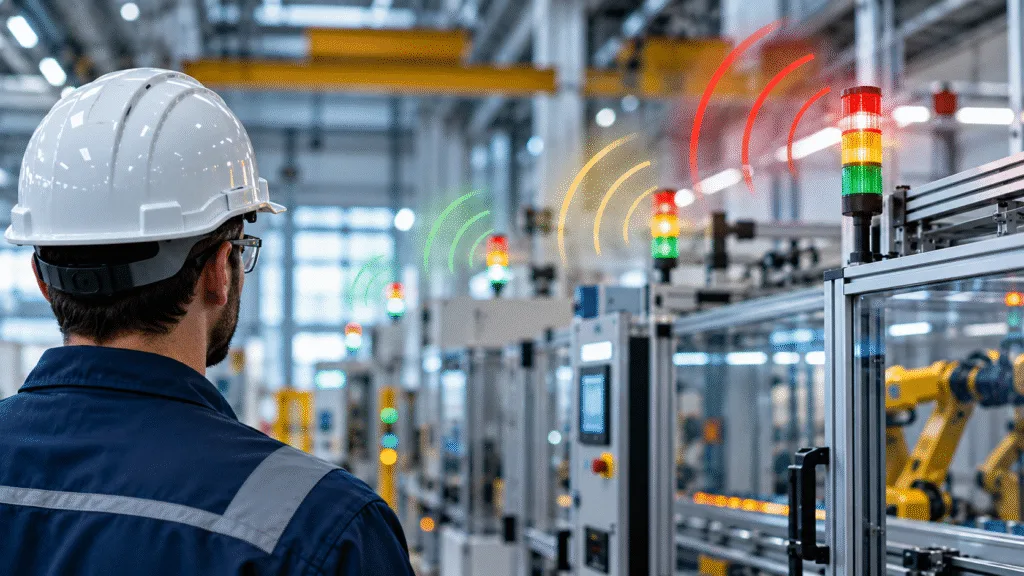
In modern industrial processes, visual and audible communication between machines and operators is a critical component of functional safety. Electronic LED signal lamps do more than indicate an alarm condition: they provide an integrated communication layer within the control system, delivering real-time information on machine downtime, process faults and operating statuses. TER (Tecno Elettrica Ravasi) designs these devices for installations where a communication failure could result in costly production downtime or pose a genuine risk to personnel.
Electronic LED signal lamps for industrial applications are visual and audible signalling devices incorporating multicolour LEDs, configurable sound modules and, in more advanced models, digital communication interfaces for connection to the PLC. Selecting the right device requires an assessment of its IP rating, visibility under high ambient-light conditions and ability to indicate multiple operating statuses through a single signal tower.
From passive signalling to active process control
Traditional signal lamps were limited to steady or flashing illumination, based on binary on/off logic. In some versions, TER electronic LED signal lamps overcome this limitation by incorporating programmable electronic drivers that manage complex light sequences, variable intensity and synchronisation with machine statuses. They can also indicate the priority level of the required action or the progress of a production cycle.Electronic integration also enables signal lamps to be connected to fieldbus networks, turning them into active nodes within the automation network rather than simple passive low-voltage devices.
Design architecture and visibility requirements
The optical component is based on high-efficiency LED technology, providing low power consumption and an operating life of up to 50,000 hours. The transparent polycarbonate lens influences the viewing angle, ensuring that the signal remains clearly visible even in environments with intense natural light, such as industrial buildings with large glazed areas or outdoor installations.
For audible signalling, integrated sound modules provide multiple distinct tones to differentiate a critical alarm from an informational signal. The sound output, adjustable up to 133 dB, must be set according to the ambient noise level to ensure that the signal can be perceived effectively without causing auditory fatigue.
Environmental resistance and industrial applications
TER electronic LED signal lamps are designed to operate in harsh conditions, with enclosures providing protection ratings up to IP65 against dust, water jets and weather conditions. They are suitable for a wide range of industrial applications, from control panels and assembly lines to maintenance monitoring and warning systems. For the Oil & Gas and chemical industries, reinforced versions are preferred, as they can operate in aggressive environments without compromising the integrity of the visual or audible signal. Automated parking systems and industrial high-speed doors also benefit from electronic LED signal lamps, which provide users and maintenance personnel with immediate information about the operating status.
Integration with control systems and functional safety
A key aspect is the ability of the signal lamp to interface with the PLC. TER models feature multiple independent control inputs, each associated with a specific machine status, thereby simplifying remote diagnostics and reducing maintenance time and costs. Compliance with the Machinery Directive 2006/42/EC is essential when the signal lamp also provides a pre-alarm before an emergency stop.
Frequently asked questions about industrial electronic signal lamps
What is the difference between a traditional signal lamp and an electronic LED signal lamp?
A traditional signal lamp provides a single steady or flashing mode, whereas an electronic LED signal lamp features a programmable driver capable of managing multiple operating states and direct connection to a PLC.
What IP rating is required for a signal lamp in harsh environments?
For environments exposed to dust, water or weather conditions, an IP65 rating is generally required, with reinforced enclosures used in the food and chemical industries.
Can TER LED electronic signal lamps be integrated with the system PLC?
Yes. Their independently configurable control inputs can be connected directly to the PLC outputs, simplifying remote diagnostics and reducing troubleshooting time.
Can LED electronic signal lamps replace a dedicated audible alarm?
In many cases, yes. The integrated sound modules provide multiple selectable tones and an adjustable sound output of up to 133 dB, sufficient to meet most industrial alarm requirements.
Technical section for experts
Procedure for configuring a multistatus LED electronic signal lamp:
Identify the machine statuses to be indicated and assign each one a unique colour and light mode. Connect the PLC outputs to the control inputs according to the supplied wiring diagram. Set the priority levels so that critical alarms override informational signals. Verify that both the visual and audible signals can be clearly perceived from the operator station located furthest away within the planned layout.
Conclusions
The adoption of TER LED electronic signal lamps turns machine–operator communication into an effective process control tool. To learn more, read our guide to industrial control devices, covering complementary control stations and HMI solutions.