
 it
it en
en +39 039 9911011
 +39 039 9910445
 info@ter.it


In today’s industrial automation landscape, precise motion control and operational safety are not merely regulatory requirements but fundamental pillars of production continuity. Industrial limit switches represent the critical interface between power mechanics and control electronics. This guide, prepared by the specialists at TER (Tecno Elettrica Ravasi), provides an in-depth analysis of electromechanical switching technologies, equipping industry professionals with the knowledge required to make informed and effective product selection decisions.
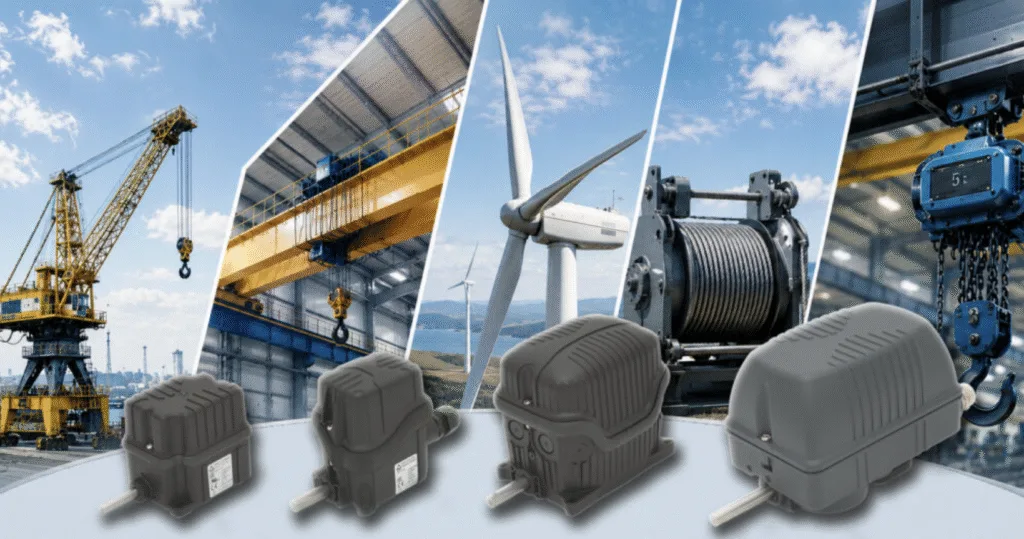
The architecture of industrial limit switches: beyond the simple contact
An industrial limit switch is an electromechanical device designed to convert mechanical motion into an electrical signal. Although the underlying principle may appear straightforward, the engineering behind TER components reflects the level of sophistication required for applications where failure is not an acceptable option. A typical device consists of an actuating head (actuator), a housing containing the contact blocks (microswitches), and an electrical connection system.
The choice of housing material, ranging from reinforced engineering thermoplastics to die-cast aluminium, determines the device’s mechanical strength and its ability to operate reliably in chemically aggressive environments or under severe vibration. Structural robustness is the first parameter that engineering teams should evaluate to ensure a high Mean Time Between Failures (MTBF).
Limit switch taxonomy and MTTF: position limit switches vs. rotary limit switches
The classification of industrial limit switches can essentially be divided into two main categories, each based on distinct operating principles and designed for specific applications.
1. Position and cross limit switches
Position limit switches are designed to detect the presence of an object or the attainment of a physical limit along a linear axis. In lifting applications, such as overhead cranes, cross limit switches (including TER‘s Arke, 7551/7552, and X/FSC-X/XFRZ series) perform a critical safety function. These devices are equipped with actuating rods that, when struck by a mechanical stop, trigger multiple switching thresholds, ranging from travel deceleration to a complete emergency stop.
The accuracy of the operating point and switching repeatability are the key technical performance indicators (KPIs). A positioning error of just a few millimetres, repeated over thousands of operating cycles, can compromise the calibration and overall performance of an entire material handling system.
2. Rotary limit switches
Rotary limit switches represent the pinnacle of TER‘s engineering expertise. Unlike position limit switches, these devices are directly coupled to the drive shaft or another rotating component through a gear reduction mechanism. Their function is to monitor the number of shaft revolutions or the rotational speed of the connected shaft, converting rotary motion into a corresponding linear position.
Flagship TER models such as the Top, Oscar, and Fox series offer an exceptionally wide range of gear ratios, from 1:1 up to 1:8100, making them ideally suited for applications including winches, tower cranes, and wind turbines. The ability to integrate auxiliary feedback devices (such as absolute or incremental encoders and potentiometers) within the same enclosure transforms these units into comprehensive feedback nodes for the PLC, providing both position monitoring and motion control within a single compact device.
Operating in harsh environments: protection ratings and materials
For Italian small and medium-sized enterprises (SMEs) designing and exporting industrial machinery worldwide, environmental resistance is a key competitive advantage. TER components are designed and tested to meet the most demanding Ingress Protection (IP) requirements, ensuring reliable operation even in the harshest industrial environments.
TER’s engineering standards are reflected in the following protection ratings:
- IP66/IP67: provides protection against powerful water jets and temporary immersion, making these devices suitable for demanding applications such as the stone-processing and marine industries.
- IP69K: essential for the food and pharmaceutical sectors, where machinery is routinely subjected to high-pressure, high-temperature washdowns using chemical cleaning agents.
The use of EPDM seals and steel screws ensures long-term resistance to galvanic corrosion and structural degradation. The integrity of the electrical signal depends directly on the enclosure’s ability to maintain a dry, contaminant-free internal environment throughout the product’s service life.
Contact optimisation and functional safety
From an electrical standpoint, TER limit switches incorporate contact blocks engineered to withstand millions of operating cycles. The distinction between snap-action and slow-action contacts is crucial:
- Snap-action contacts are preferred in applications where the actuator moves at very low speed, ensuring instantaneous switching that prevents the formation of electrical arcing.
- Slow-action contacts enable precise synchronisation between the opening of one circuit and the closing of another, a key requirement for complex safety control logic.
From a machinery safety perspective (Machinery Directive), many TER models are designed to comply with the requirements for positive opening operation of normally closed (NC) contacts, in accordance with IEC 60947-5-1. This ensures that the safety circuit is interrupted even if the contacts become accidentally welded together, a fundamental requirement for achieving high Safety Integrity Level (SIL) ratings.
Installation and maintenance: the value of modularity
One of the distinctive advantages of TER products is their modular design. The ability to adjust the internal actuating cams with exceptional precision enables installation technicians to set the switching points quickly, accurately, and safely. Dedicated adjustment rings eliminate the need for complex mechanical interventions, significantly reducing commissioning time and simplifying on-site installation.
Conclusion
Choosing a TER industrial limit switch means more than simply purchasing a component: it means investing in a technology partner committed to delivering safety, reliability, long service life, and compliance with the highest international standards. Whether the application requires a rotary limit switch for the aerospace industry or a position limit switch for a bottling plant, TER‘s Italian engineering excellence provides the quality and performance that modern SMEs need to compete successfully in global markets.